I've visited every major pepper farm on Bangka Island three times over, and the question I still get most from new buyers is some version of "can't you just make the white pepper from the same stock as the black?" Botanically, yes — same species, Piper nigrum. Commercially and in the cup, they're different enough that Nusawara treats them as entirely separate product lines, sourced from different regions, with different farmer networks.
Muntok white pepper — the reference standard
Grown exclusively on Bangka Island, Muntok-style white pepper is made by harvesting fully ripe berries, then retting them in fresh spring water for 8-10 days to loosen and remove the outer skin, leaving just the pale inner seed. The result is a cleaner, sharper heat than black pepper, without the outer skin's earthy, slightly fermented undertone. Our Muntok #1 grade tests at 630 g/L bulk density — the benchmark figure buyers use worldwide when specifying "Muntok-grade" in a contract, whether or not the pepper actually came from Bangka.
Lampung black pepper — the volume workhorse
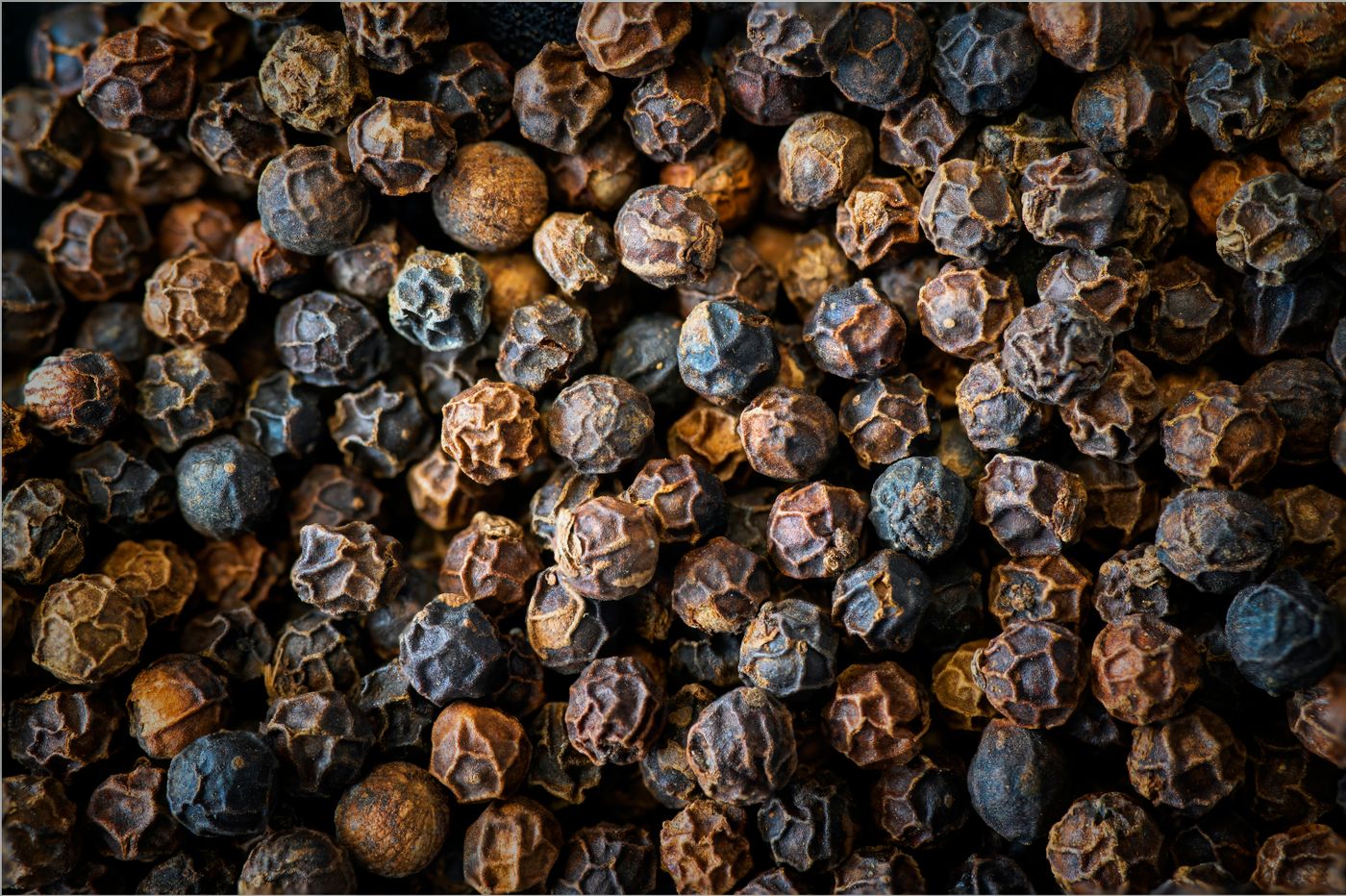
Grown across smallholder farms in southern Sumatra, Lampung black pepper is harvested slightly under-ripe and sun-dried whole, skin included. That skin is where most of the piperine — the compound responsible for pepper's pungency — concentrates, which is why Lampung black consistently tests at 4-5% piperine content, among the highest of any origin worldwide. The flavour is bolder and more complex than white pepper: the same core heat, plus woody, slightly floral top notes from the dried skin.
Buyers switching between white and black expecting a like-for-like swap almost always under- or over-season their first batch. White pepper's heat hits faster and cleaner; black pepper's heat is slower to build but has more going on around it. If your recipe was developed on one, taste-test before substituting the other — don't assume a 1:1 swap.
— Sri Wulandari, Senior Sourcing Analyst
Side-by-side
- Processing: Muntok — retted in spring water, skin removed. Lampung — sun-dried whole with skin intact.
- Piperine content: Muntok — moderate. Lampung — 4-5%, among the world's highest.
- Flavour: Muntok — clean, sharp, minimal earthiness. Lampung — bold, complex, woody-floral top notes.
- Typical use: Muntok — light-coloured sauces, cream-based dishes, white-pepper-forward Asian cuisine. Lampung — general culinary use, spice blends, visible cracked pepper applications.
- Grading benchmark: Muntok — 630 g/L bulk density (Muntok #1). Lampung — ASTA 550 g/L and above.
Which should you order?
If your product needs pepper heat without visible dark specks — a cream sauce, a light broth, a white-pepper-marinated dish — Muntok is the only real choice; black pepper will show. If you want maximum flavour complexity and don't mind visible cracked or ground black flecks, Lampung is both more affordable per kilogram and, for most general culinary applications, the more versatile grade. Many of our foodservice buyers stock both: Muntok for finishing and delicate applications, Lampung for everything else. We supply both at 500kg minimum order with steam-sterilised options on either grade for buyers who need a validated microbial kill step.