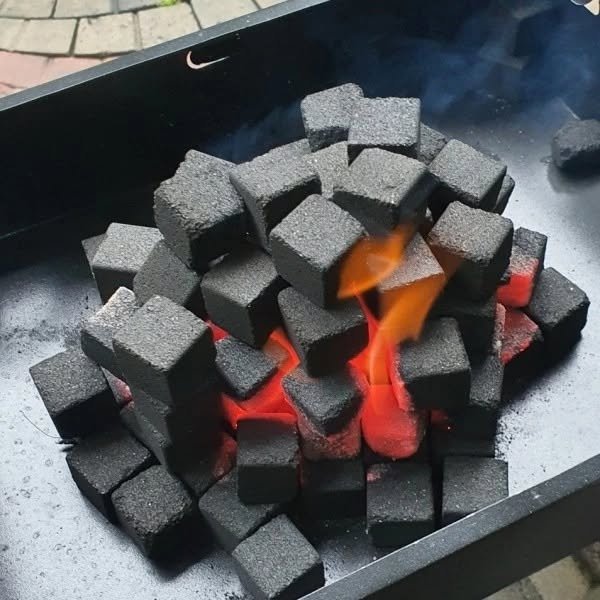
A retailer or venue that gets an uneven, smoky burn from a batch of coconut charcoal briquette will usually blame the supplier first. In practice, ignition method and storage conditions after delivery are just as often the real cause — and both are entirely within the buyer's control.
Lighting methods, ranked by consistency
- Chimney starter — the most even method for grilling use; briquettes ash over uniformly in 12–15 minutes with no lighter-fluid taste
- Electric coil burner — the shisha-industry standard; heats a full batch evenly in 6–8 minutes and is the method most Gulf lounges already use
- Direct open flame — works but heats unevenly, leaving some faces of a briquette ashed and others still black, which shows up as an inconsistent burn once in use
How to tell it's ready
Coconut shell briquette is ready to use once at least 80% of each piece shows a light grey ash coating, not just the outer edges. Using it too early traps unburned volatile compounds inside the piece, which is the single most common cause of a harsh, smoky taste complaint in shisha use specifically.
Storage: the moisture problem
Coconut shell charcoal is naturally porous and will reabsorb ambient moisture if stored improperly — a real risk for buyers in humid coastal or tropical destination markets. Reabsorbed moisture doesn't just slow ignition; it can cause pieces to crack or crumble under the pressure of stacking, turning saleable briquette into unsellable dust by the time a carton reaches the shelf.
- Keep cartons sealed until point of use — don't break bulk packaging for storage
- Store on pallets, off the direct floor, in a dry warehouse area away from loading-dock humidity
- Avoid stacking heights that crush lower cartons — crushed briquette generates more fines and dust, which burns unevenly
- First-in, first-out stock rotation — even sealed, briquette performs best used within 12 months of packing