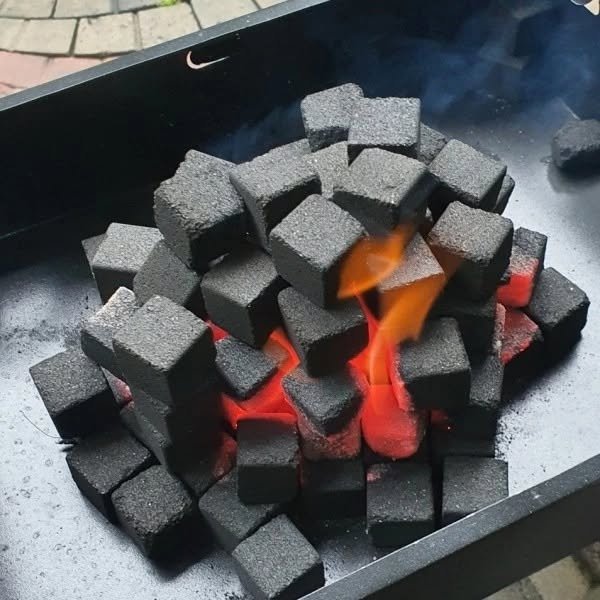
Walk into any coconut charcoal briquette factory in Indonesia and you'll usually find three or four different molds running at once — because "charcoal briquette" isn't one product, it's a shape decision made for a specific burn profile, and buyers who don't specify a shape often end up with stock that doesn't fit their equipment or their customers' expectations.
The shapes that dominate the export market
- Cube — the most common shape for both shisha and grilling, easy to stack and pack, moderate surface area
- Hexagonal — a shisha-charcoal standard because the flat faces sit evenly on a heat management device (HMD) and burn more uniformly across a session
- Pillow — the classic barbecue-briquette silhouette familiar to Western grilling buyers, larger surface area for faster ignition
- Finger/stick — narrower and longer, used where a burner or holder is sized for a specific length rather than a stackable block
Shisha-grade vs. grilling-grade: what actually differs
The shape is the visible difference, but density and sizing tolerance matter more to a buyer's actual experience. Shisha-grade briquette is generally pressed denser and sized more tightly — a shisha lounge burns through units quickly across a night and needs consistent, predictable heat per piece. Grilling-grade briquette tolerates more size variance because it's judged on total burn time and ash cleanup for a single cookout, not piece-by-piece consistency across dozens of sessions a night.
Reading a specification sheet: the numbers that matter
- Calorific value — typically 6,500–7,500 kcal/kg for good coconut shell briquette; lower numbers usually mean a higher proportion of binder to shell char
- Ash content — under 3% is considered premium; anything over 5–6% will show up as visible residue and shorter usable burn
- Fixed carbon — the higher this is relative to volatile matter, the cleaner and less smoky the burn
- Moisture at packing — should sit at or under 8%; higher moisture means slower ignition and a higher risk of cracking in transit
Why coconut shell over other raw materials
Coconut shell briquette competes against sawdust briquette, coal-based briquette, and lump wood charcoal in most markets. Its advantage isn't just burn quality — it's that shell is a byproduct of coconut food and oil processing rather than a raw material grown or logged specifically for fuel, which matters increasingly to buyers who have to answer sustainability questions from their own retail or hospitality customers.
See Nusawara's coconut charcoal briquette line